
Craft, Embroidery, and the people who taught me
Origin
My grandmothers were regal in the everyday — pearls with chiffon, emeralds with lace. Even at home, their fabrics and posture told a story. I didn't know it then, but that was my first lesson in craft: that beauty could be a quiet language, not a loud one.

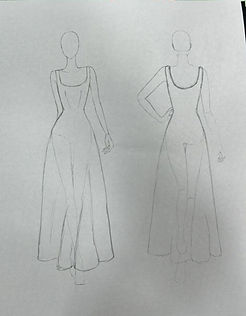
My mother taught me the rest — how to sketch, measure, and slowly bring an idea to life. We'd spend afternoons in fabric stores and tailoring shops, watching a drawing become something you could actually wear. That's when I understood design wasn't really about appearance.
It was intention, memory, identity — worn.




Widening the lens
Appreciation for craft, keeping it alive
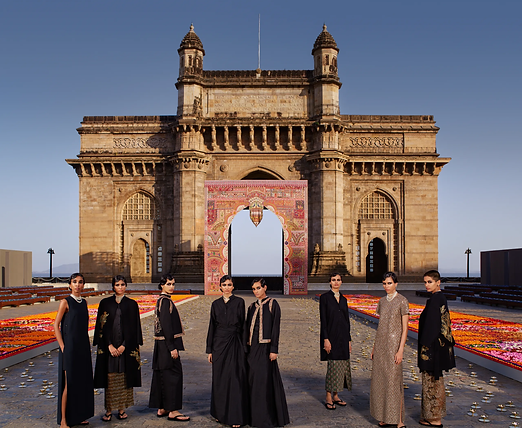
Later, I interned at Chanakya — the atelier behind Dior's first show in India — and it changed how I saw everything. I stopped looking at a finished piece and started noticing the hundred decisions behind it: the density of a weave, the curve of a cut, the hands a piece passes through before it ever reaches you. These are skills that take a lifetime to master and are quietly disappearing — I think a lot about what it means to keep them alive, and to make sure the people behind them are seen, not just the label.

Nidhi Embroideries
Going back to re-learn, Obsession with detail
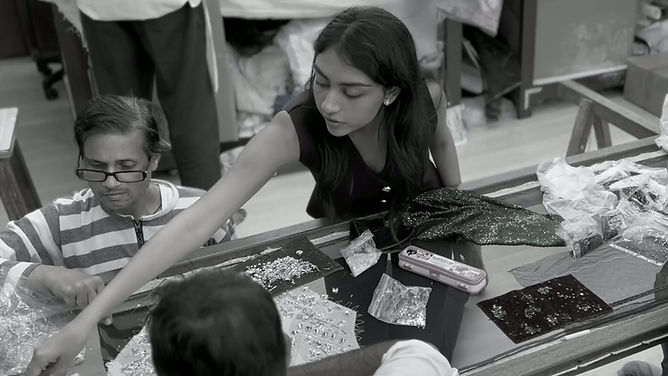
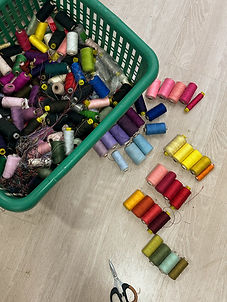
Eventually I wanted my own hands to understand what I'd spent years admiring. I went back to relearn embroidery properly, sitting with karigars who'd spent decades with a needle I'd only just picked up — thread tension, stitch rhythm, the small decisions that separate embroidery that looks right from embroidery that feels right. I became a little obsessive about it. The fabric, the stitch, how a piece feels under your hand — to me, that's never secondary to how it looks. Sometimes it matters more.


Sketch
Garment