


Solene began as a feeling more than a brief — the idea that a club could feel like an invitation, not a transaction. I thought about it the way you'd think about a room you want to sit in for hours: what it looks like, but also how it sounds, what it smells like walking in, how a menu should read before you've even ordered. Building the identity meant living inside that feeling long enough to translate it into something people could walk into


BRAND IDENTITY
Logos are easy to draw and hard to mean. I wanted ours to feel inevitable — like it had always belonged on that entrance, that menu, that uniform, that door. So the identity wasn't designed once and applied; it was tested against real objects until it felt native to all of them.
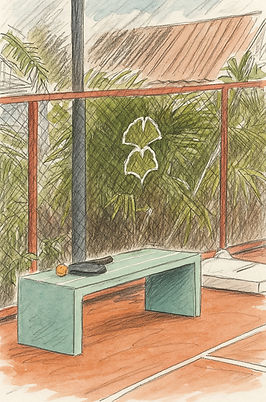
SPATIAL DESIGN
A brand isn't just what you see — it's what you brush against. I spent a lot of time on-site, working alongside architects and artisans, thinking about how identity holds up in three dimensions — in a court you play on, a bench you sit on, a hundred-year-old wall you're borrowing character from.

MATERIALS & CRAFT
I'm drawn to texture the way some people are drawn to color. Every fabric, weave, and finish was a small decision about what luxury should feel like under your hand — never loud, always considered.
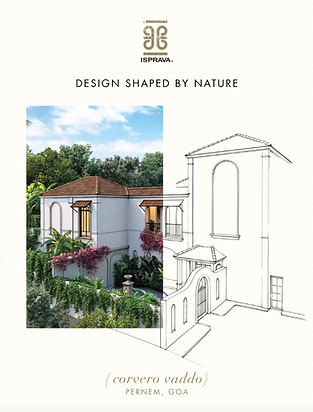

Isprava is where I learned to hold a brand across many hands at once — architects, craftsmen, writers, photographers — and still keep it recognisably one thing. Every home carried its own site, its own materials, its own story, but somewhere underneath, they all had to sound like the same person speaking. That tension between individuality and consistency became the real work

BRAND GUIDELINES & ARCHITECHTURE
Owning an Isprava home was never meant to begin and end at the front door. The brand didn't live in the logo, it lived in the hundred small moments before and after someone saw it. Each house had a different landscape; each city, a different tone; each homeowner, a different personality. Yet every detail had to speak the same language of the Isprava way of living.

THE INSIDER MAGAZINE
For three issues, I got to think like an editor instead of a marketer, choosing what a reader would actually want to sit with, rather than what a brand wanted to say. It became less about advertising and more about giving people a reason to trust us with their attention.

COLLABORATIONS
Some of the most interesting brand work isn't building something new — it's choosing good company. I curated partnerships with makers like Art-chives, Ikai Asai, and Salt, each one chosen because it added a texture the brand didn't already have on its own.